When I first started flower farming, things felt simple. I grew what I wanted, harvested what was ready, and sold whatever was blooming. Customers came to the farm stand, subscribed to seasonal bouquets, and were excited to support local flowers. They weren’t asking for specific varieties or exact colors. They wanted beautiful flowers and they trusted the season.
That stage of business taught me a lot, and honestly, there is nothing wrong with operating that way if that’s the kind of farm you want to build.
But eventually my business changed.
As weddings became a bigger part of what I offered and I started working more closely with florists, I realized I could not keep approaching production the same way. The expectations became completely different. Customers were no longer asking, “What’s available this week?” They were asking for specific quantities, exact colors, particular varieties, and delivery windows that could not move.
Suddenly the question became: Will I have 200 stems of blush ranunculus available for the second weekend in June?
That shift forced me to realize something important. I wasn’t simply growing flowers anymore. I had become part of a supply chain. And supply chains do not run on hope.
That realization is what made crop planning one of the most important systems in my business.
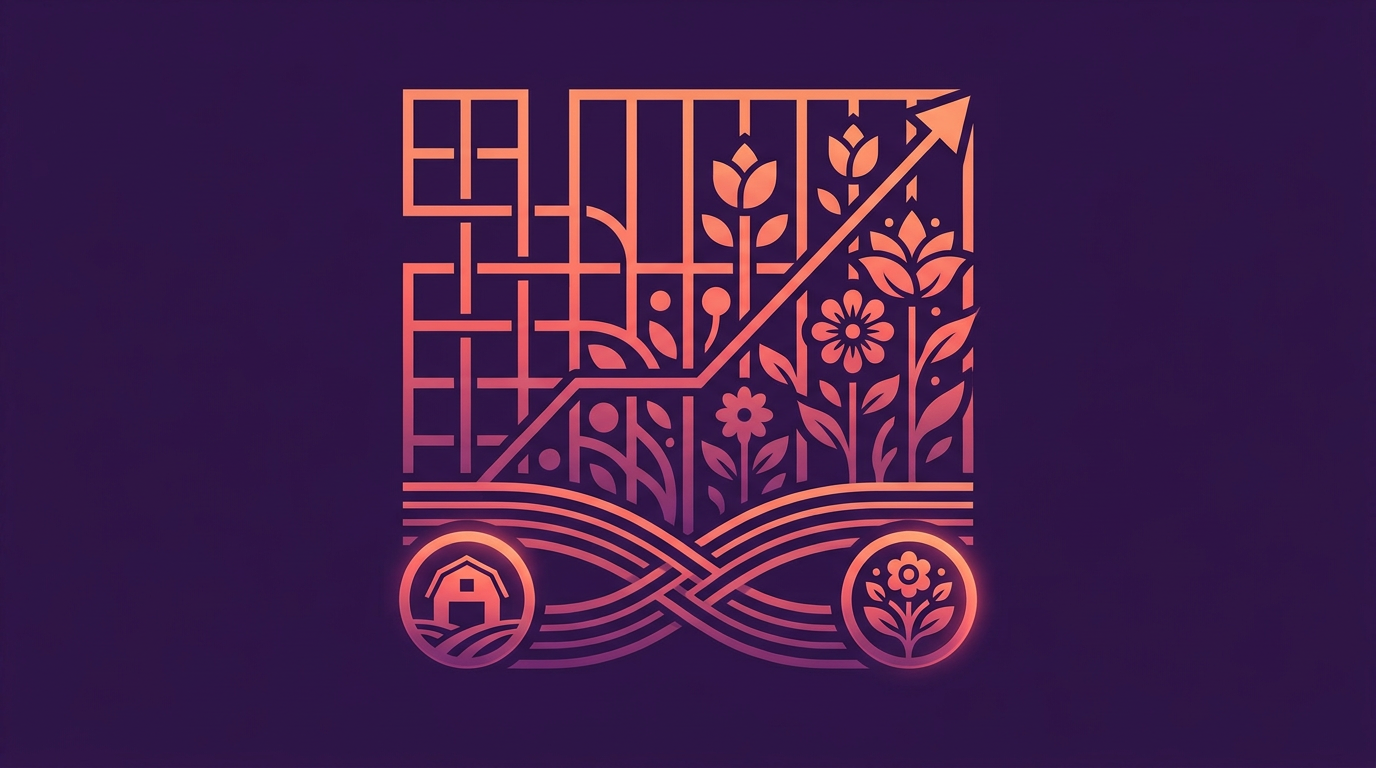
People sometimes hear the phrase crop planning and assume it means complicated spreadsheets and endless forecasting. But at its core, crop planning is simply creating intention around what you grow and when you grow it.
A crop plan helps predict bloom timing by combining planting dates with estimated days to maturity. It gives structure to decisions that otherwise feel reactive. Of course, flowers do not always follow the plan. Weather changes things. Growing conditions vary. Experience matters. But moving from guessing to projecting changes how confidently you can run your business.
What became even more valuable over time was documenting what actually happened.
Tracking planting dates alone is helpful. Tracking first harvest dates is transformational.
Once you start recording expected timing versus actual timing, every season becomes more useful than the last. You stop relying on memory and start building data. That data becomes patterns, and those patterns become better decisions.
Crop planning also changes how you think about growth.
Scaling isn’t simply planting more flowers. It means understanding production capacity. How many beds can support your goals? How many plants translate into harvestable stems? How many stems can realistically be delivered each week?
Florists and event clients do not need “some flowers.” They need dependable numbers.
The final shift happens when production starts aligning with demand instead of possibility.
Rather than growing flowers and hoping someone buys them, you begin planting for specific opportunities. You know the weddings already booked. You know upcoming color palettes. You understand what your florist partners need and when they need it.
That changes the relationship completely.
Instead of reacting to demand, you begin planning around it.
One thing I always remind people is that your first crop plan will not be perfect. Mine certainly wasn’t.
The goal isn’t perfection. The goal is learning.
Year one gives you estimates.
Year two gives you adjustments.
Year three starts revealing patterns.
You discover what blooms later than expected, what underperformed, where you created gaps, and where opportunities exist.
Over time the business becomes easier, not because you’re working less, but because your decisions become more informed.
At the end of the day, there is absolutely nothing wrong with growing whatever blooms. For many flower farms, that model works beautifully.
But if your goal is to serve weddings, collaborate with florists, increase revenue, and reduce chaos, eventually you have to stop guessing and start planning.
The goal isn’t to grow more flowers. The goal is to grow flowers with purpose.
Stay rooted with us
Get stories and insights delivered straight to your inbox each week
